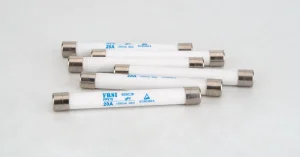
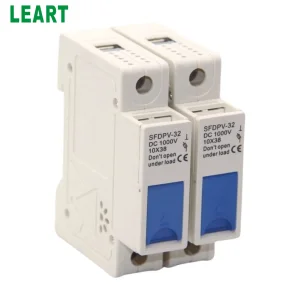
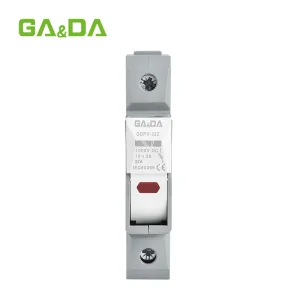
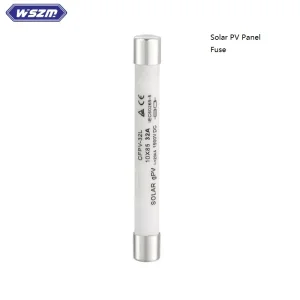
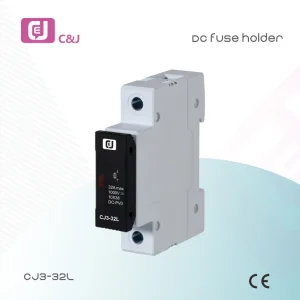
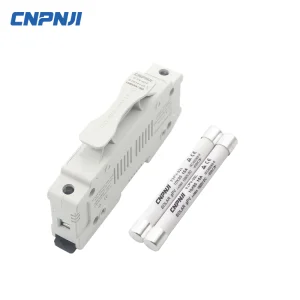
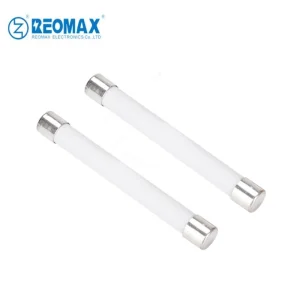
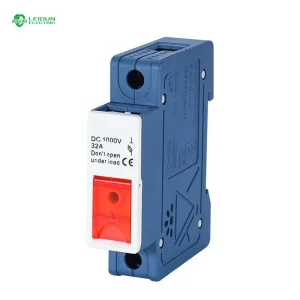
Premium grade photovoltaic fuses engineered with heavy-duty ceramic housings and precision-machined elements to ensure safe circuit interruption under high DC string voltages.
Malakal, as a crucial regional economic and humanitarian hub in the Upper Nile, faces distinct infrastructure realities. The region relies extensively on off-grid microgrids, remote solar hybrid power plants, and localized distribution networks. With daytime temperatures frequently soaring past 40°C, and dust storms bringing fine-particle ingress, standard electrical protection components are pushed past their design envelopes.
Photovoltaic setups in Malakal are exposed to extreme thermal cycles and severe load fluctuations. Standard residential fuse mechanisms cannot survive the intensive DC reverse-current scenarios typical in these large-scale solar arrays. SDEV’s line of heavy-duty ceramic gPV fuses is precisely engineered to address these concerns. Their high temperature tolerance and optimized time-current characteristics eliminate premature thermal aging and prevent costly system downtime in isolated locations.
By leveraging advanced thermal dissipation geometry and high-grade quartz sand filling, SDEV fuses ensure arc quenching occurs in milliseconds, preventing catastrophic combiner box fires. This level of reliability is non-negotiable for critical installations, such as water treatment systems, localized medical centers, and telecommunications towers throughout the region.
Foshan SDEV Charger Co., Ltd. is a globally trusted manufacturer of protective components for photovoltaic and energy storage systems. Our extensive experience working in the electrical industry for more than 30 years allows us to design and manufacture solar DC components that comply with the latest global DC standards. Through our persistent focus on solar DC protection design, production, and marketing, we deliver brand-building PV protection solutions that perform in the harshest environments.
With an inherited legacy of 30+ years of R&D in DC circuit protection, we have continuously expanded our technology portfolios into the EV charging and energy storage sectors. Over the years, SDEV has attentively invested resources in research on EV-related systems, continuously manufacturing diverse lines of protective equipment, and earning widespread recognition across international markets.
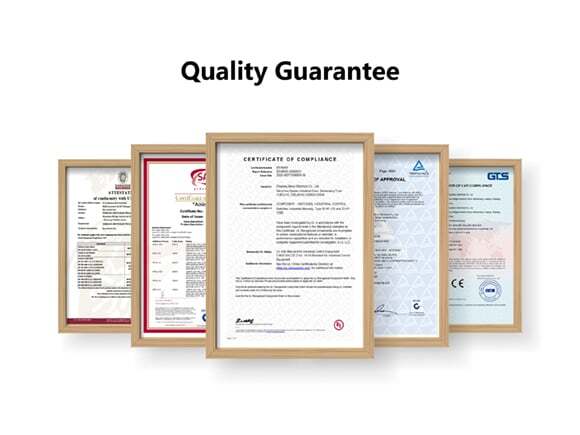
Quality remains the primary goal among each of our state-of-the-art workshops, ensuring top-tier safety for solar, storage, and EV charging applications. To realize this goal, our manufacturing facilities and product catalogs are fully compliant with UL, SAA, CB, CE, TUV, ISO, and RoHS standards.
Our commitment to rigorous QA/QC processes and continuous materials science innovation translates into quantifiable real-world performance metrics.
Staying at the forefront of the renewables sector requires rapid prototyping and deep supply chain resilience. Our in-house R&D team continuously formulates advanced products based on evolving market demands. These efforts resulted in our first UL508i listed patented DC switch within China, alongside our specialized DC-PV2 switches produced for demanding utility-scale projects globally.
Operating from our integrated manufacturing base in Foshan, China, SDEV leverages localized industrial clusters to secure high-purity raw materials. Our raw material sourcing covers premium steatite ceramic bodies and pure silver elements. This structure allows us to maintain stable production lead times and cushion global supply line shocks. SDEV is a highly reliable manufacturing partner for distributors, wholesalers, and EPC contractors in developing regions like South Sudan, providing consistent delivery cycles and robust technical backup.
Our technology roadmap features smart diagnostic fuse holders. These systems use integrated IoT sensors to signal real-time status and thermal anomalies back to remote SCADA interfaces. This technology minimizes operating costs, particularly across distributed off-grid sites where manually locating a blown fuse takes hours of travel.

Why standard industrial protection fails in remote areas like Malakal, and how SDEV designs custom solutions to bridge the gap.
Standard fuses trip prematurely in high ambient temperatures. SDEV uses high-density ceramic bodies with engineered quartz sand backfill to stabilize heat dissipation, reducing thermal derating by up to 15% under extreme ambient heat.
Our fuse links feature silicon-bronze plated end-caps that resist atmospheric corrosion, maintaining low contact resistance under humid river valley conditions and dust storms.
With an interrupting capacity of up to 50kA at 1000V/1500V DC, our fuses safely clear severe fault currents, protecting critical inverters and solar array strings.
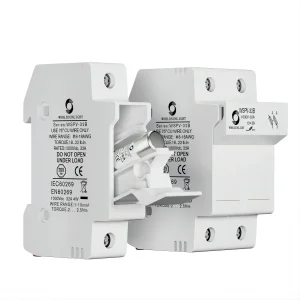
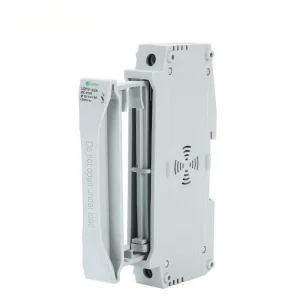
Explore SDEV’s certified range of DC fuse links, compact rail holders, and molded case circuit protection devices engineered for global commercial and utility installations.
Crucial design considerations, installation practices, and compliance guidelines for solar PV overcurrent protection devices (OCPD).
Photovoltaic strings present unique low-overcurrent scenarios where fault currents are barely higher than the nominal operating currents. Standard industrial fuses (e.g., gG/gL classes) are designed for large fault currents and fail to clear these low, sustained DC faults quickly enough. This delayed response can lead to thermal runaway. gPV fuses are engineered specifically to clear low-overcurrent faults rapidly, even under high DC source voltages.
High ambient operating temperatures reduce the current-carrying capacity of fuse links. To prevent nuisance tripping, systems operating in temperatures above 40°C must apply a thermal derating factor. SDEV’s technical guide recommends calculating the adjusted fuse rating ($I_{adj}$) using the formula: $I_{adj} = I_n \times K_t$, where $K_t$ is the thermal correction coefficient supplied by our engineering support team.
1500V DC architectures allow for longer string configurations, reducing the total number of combiner boxes, DC cabling, and connection terminals. This structure cuts installation costs by up to 30%. However, 1500V systems demand enhanced insulation levels and superior arc-quenching capabilities. SDEV’s 10x85mm and 14x85mm ceramic fuses are designed specifically to operate safely under these high-voltage 1500V DC profiles.
Every batch of SDEV protective components undergoes automated cycling, thermal imaging analysis, and mechanical tolerance verification. Our R&D facility utilizes specialized DC load test benches to simulate decades of day-night thermal transitions, ensuring the internal fuse elements do not fatigue or shift in resistance over their operational lifetimes.
Protect your photovoltaic systems from overcurrent events and thermal stress. Connect with SDEV's application engineers for custom wiring layouts, volume wholesale pricing, and technical support tailored to your project requirements.
Send Inquiry Now SDEV Charger