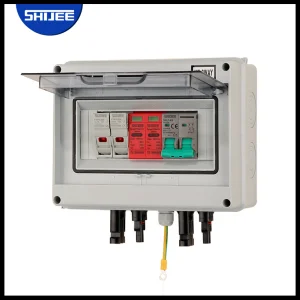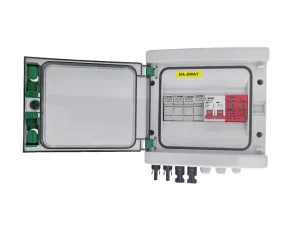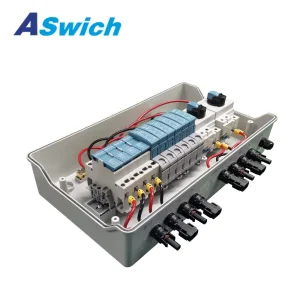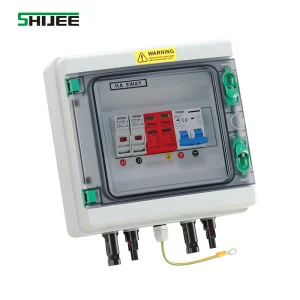
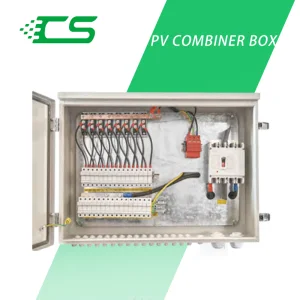
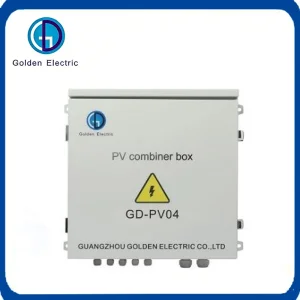
As the West African nation of Benin accelerates its transition toward decentralized and grid-connected renewable energy systems, the demand for robust, industrial-grade Balance of System (BoS) solutions has grown exponentially. Supported by the Millennium Challenge Account (MCA-Benin II) and international investment in projects like the DEFISSOL Photovoltaic Plant, Benin aims to supply reliable, clean electricity across urban hubs such as Cotonou, Porto-Novo, Parakou, and remote rural off-grid sectors.
However, operating photovoltaic hardware in West Africa presents unique environmental and operational hazards. In Benin, solar installations must survive in two vastly different climatic profiles:
Consequently, typical PV junction boxes designed for temperate climates fail prematurely in West Africa. Our specialized range of IP67 and IP65 DC combiner boxes and junction boxes is custom-engineered to handle these extreme environmental challenges, providing high-efficiency electrical consolidation and complete system safety.
Foshan SDEV Charger Co., Ltd. is a trusted manufacturer of protective components for photovoltaic systems across the globe. Our experience of working in the electrical industry for more than 30 years allows us to create solar DC components that comply with the latest DC standards. Through our focus on solar DC protection design, production, and marketing, we can bring brand-building PV protection solutions.
With the inheritance of 30+ years of experience in the research and production of DC protection products, we are continuously dedicated to the EV charging field. In recent years, SDEV has attentively invested resources in research on EV-related products, successively manufacturing other types of products, thus reaping wide market popularity across the world.
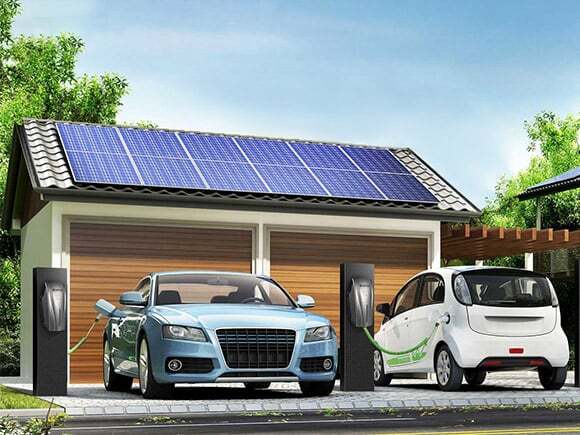
SDEV’s technical roadmap prioritizes high thermal endurance, superior material integrity, and comprehensive surge mitigation. To protect multi-million dollar solar arrays from premature degradation, we have incorporated five core design criteria in our solar DC components:
To block the fine, abrasive dust carried by the Harmattan winds, our PV junction boxes utilize precision-molded silicone gaskets and double-edge tongue-and-groove enclosure joints. IP67 models ensure that under heavy torrential rains or dust storms, no particulates or moisture penetrate the active electrical chamber, maintaining internal dry environments and preventing galvanic corrosion.
High ambient temperatures in West Africa reduce the efficiency of bypass diodes within junction boxes. When solar panels experience localized shading, the bypass diodes activate and generate significant heat. Our boxes are built with thermal-conducting structural backing and low-forward-voltage Schottky diodes, limiting heat buildup and preventing thermal runaway which can cause enclosure melting or cracking.
Persistent UV radiation in Sub-Saharan Africa causes standard plastics to become brittle and crack within 3-5 years. SDEV uses UV-stabilized, flame-retardant (UL94-V0) polycarbonate materials. This prevents degradation from constant exposure to intense sunlight and ensures that the physical protection of the box lasts for the entire 25-year lifetime of the PV modules.
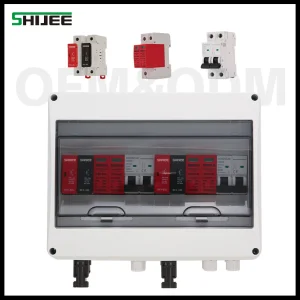
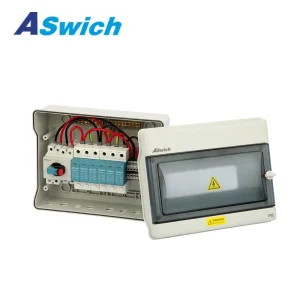
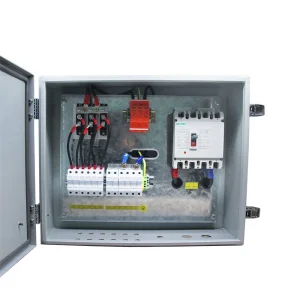
Benin’s geographic location experiences high lightning density, leading to sudden voltage spikes on DC lines. SDEV’s DC combiner boxes feature integrated, pluggable Type II Surge Protective Devices (SPDs) and specialized DC fuses (1000V/1500V rated) to isolate overcurrent and shield inverter inputs from high-voltage surges, guaranteeing continuous power production.
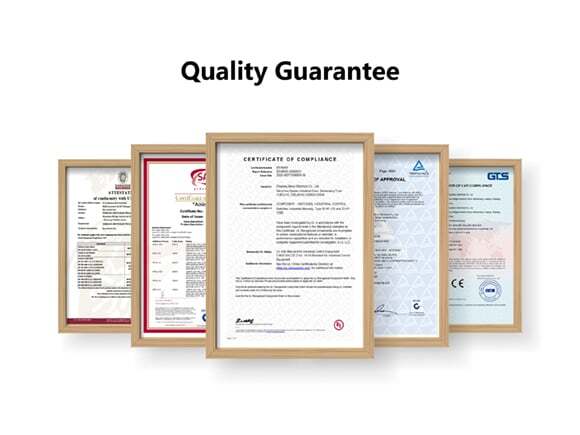
Quality is the primary goal among each of our workshops since this leads to the best performance and safety for any Solar, Storage, and EV charging system. Our commitment to quality increases brand awareness for your company. To achieve our goal, our factory and products comply with UL, SAA, CB, CE, TUV, ISO, and RoHS standards.
We maintain strict quality control throughout our manufacturing line. From incoming raw material testing to final high-voltage insulation tests, every PV junction box and combiner box destined for international projects, including West African networks, undergoes 100% functional validation to prevent field failures.
For solar EPC contractors and wholesale importers in Cotonou and wider West African markets, procurement reliability, production capacity, and shipping agility are crucial. SDEV utilizes China's advanced manufacturing and logistics networks to offer unmatched supply chain benefits:
Achieving our goals comes from formulating new products based on the market demands through our in-house R&D team. Our efforts have led to our first UL508i listed patented DC switch within China and the DC-PV2 DC switch produced for the global market. With our cutting-edge PV protective products and EV chargers, we aim to create a long-term partnership with many renewables companies.
Our commitment to continuous research keeps SDEV at the leading edge of solar safety and electrical innovation. We continue to adapt our designs to the changing demands of the global market, helping solar projects operate safely under the most challenging environmental conditions.

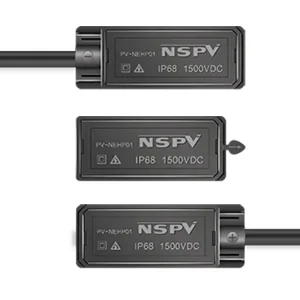
As utility-scale projects grow throughout Benin, solar system voltages are shifting from traditional 1000V DC to higher-efficiency 1500V DC architectures. This transition yields substantial Balance of System (BoS) savings, allowing longer strings and reducing the overall number of combiner boxes and cabling runs by up to 30%. SDEV is at the forefront of this shift, providing fully certified 1500V DC junction and combiner boxes built with high-clearance creepage structures and reliable arc-quenching circuit breakers.
Furthermore, our future roadmap integrates IoT-enabled monitoring solutions. Our intelligent combiner boxes feature Hall-effect current sensors, internal temperature monitors, and RS485/Modbus communications interfaces. This allows Benin operators to monitor string-level performance, quickly locate underperforming modules or dust coverage, and schedule preventive maintenance to maximize power generation.
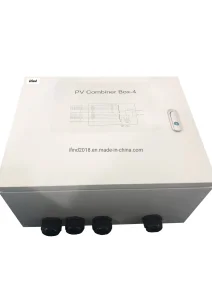
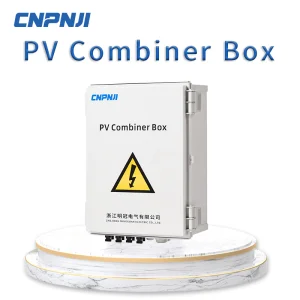
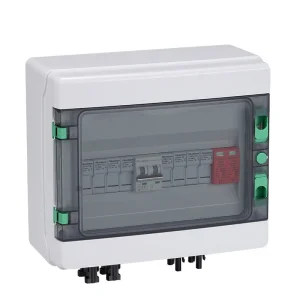
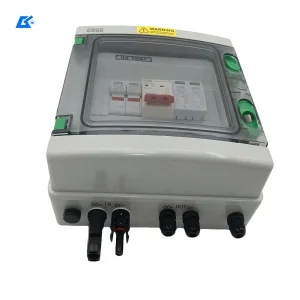
Whether you are developing utility-scale solar farms in northern Benin, off-grid mini-grids for agricultural irrigation, or commercial rooftop projects in Cotonou, our engineering team can help. We provide custom configurations, expert technical advice, and reliable bulk delivery.
Send Inquiry Now SDEV Charger