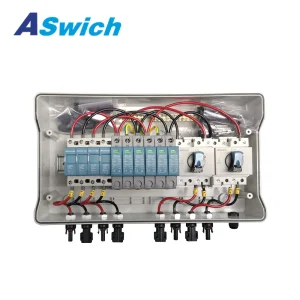
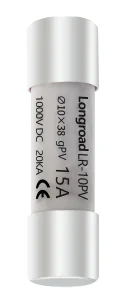
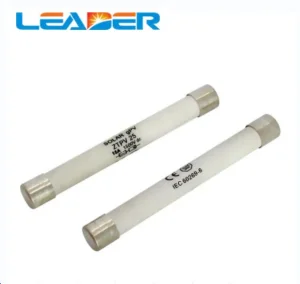
Premium class electrical components engineered to safeguard solar photovoltaic, energy storage, and industrial DC applications against high-energy surge impulses.
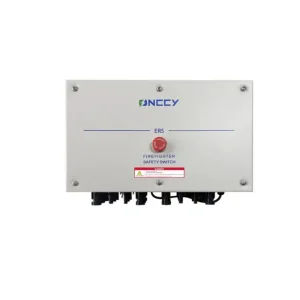
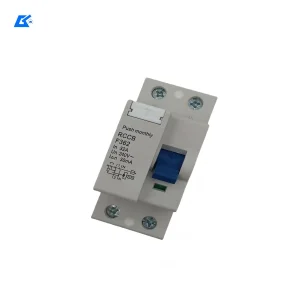
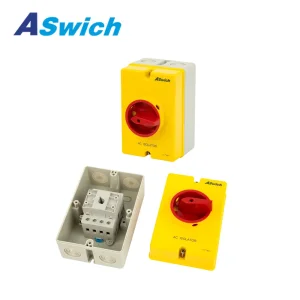
Foshan SDEV Charger Co., Ltd. is a globally trusted manufacturer and developer of specialized protective components for photovoltaic and electric vehicle charging ecosystems. Leveraging over 30 years of deep industry expertise, SDEV excels in the design, engineering, and distribution of high-performance Solar DC protection components that adhere strictly to international DC grids and global electrical standards.
Our commitment to electrical safety drives our ongoing innovation. Over the decades, we have continuously modernized our facilities, integrating state-of-the-art testing equipment and automated assembly lines to keep pace with global energy developments. Beyond photovoltaic systems, SDEV has proactively dedicated engineering resources to developing EV-focused safety technologies, achieving widespread market penetration across North America, Europe, Australia, and Asia.
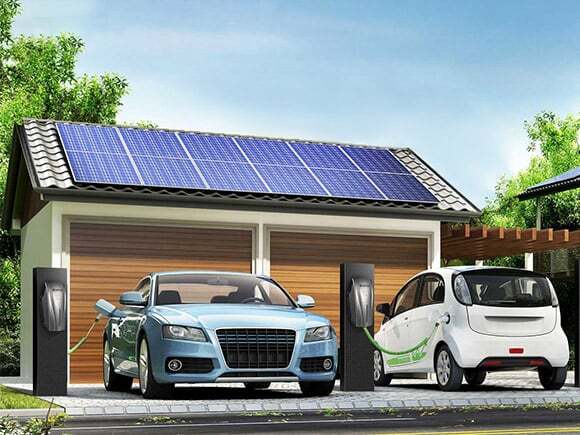
Analyzing key technological and macro-environmental forces reshaping surge protection requirements in global power distribution.
Utility-scale solar grids have shifted from 1000V to 1500V topologies. This change reduces system wiring and installation costs but demands robust surge protection ratings (Uc 1500V DC) to handle higher operating voltages without pre-mature aging of the internal Metal Oxide Varistors (MOVs).
Real-time operating data and predictive maintenance strategies dictate the integration of remote signaling contacts (floating dry contacts) and smart IoT components inside SPDs. System operators now receive automated alerts on varistor degradation before a total surge event occurs.
To completely eliminate leakage current and avoid thermal runaway over time, modern protection systems combine high-energy GDTs (Gas Discharge Tubes) in series with highly responsive MOVs, providing a safer, zero-leakage, spark-gap solution.
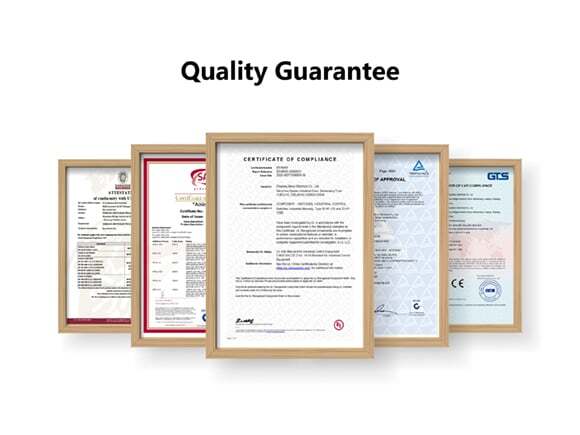
In DC circuits, particularly solar arrays, electric arcs can persist because they lack the natural zero-crossing points of alternating current. Consequently, any component failure within a DC system poses a potential fire hazard. For SDEV, maintaining rigid quality control across all our assembly lines is not just a commercial priority—it is our primary engineering metric.
To guarantee long-term safety and performance under harsh environmental conditions, our manufacturing plant and electrical components strictly conform to globally recognized testing protocols: UL, SAA, CB, CE, TUV, ISO, and RoHS. Our specialized testing laboratories put every batch of surge arresters and disconnect switches through rigorous tests, including thermal stability trials, environmental aging tests, and high-current impulse testing, to confirm they meet exact protection parameters.
How SDEV surge protection systems are strategically deployed across critical energy infrastructure to guarantee maximum uptime.
Centralized and string inverter systems operating at 1500V require Type 1 and Type 2 SPDs to withstand direct lightning impulse currents ($I_{imp}$) and transient overvoltages.
High energy density battery enclosures and DC-to-DC converters require protection against rapid transient rises, preventing damage to sensitive battery management systems (BMS).
DC chargers supply power directly to the electric vehicle's battery. Protecting this path from utility-side grid disturbances and local transients is critical to vehicle safety.
Our commitment to technological innovation starts in our research and development department. The SDEV engineering team works closely with global system designers to create electrical protection products that match changing grid demands. Our R&D efforts led to our first UL508i listed patented DC switch within China, as well as our widely distributed DC-PV2 disconnect switch.
By investing in design validation and tooling facilities, we quickly bring new concepts from the design phase to international certification. This proactive development model allows us to manufacture components like 1500V DC rapid shutdown systems, high-breaking capacity DC fuses, and hybrid surge arresters. We help our distribution and OEM partners stay ahead of evolving industry codes.

Navigating varying regional compliance standards is a key challenge for global system integrators and distributors. SDEV simplifies this process by certifying our products to match local grid codes and international safety frameworks.
We provide full technical support, compliance documentation, and engineering verification reports for tender approvals. SDEV components are designed for easy drop-in integration into local electrical assemblies, combiners, and inverters across international markets.
Our long-term developmental blueprint for introducing intelligent and high-durability protection systems.
Expert engineering answers to common technical queries on system sizing, installation, and compliance for DC surge protection.
The key difference is the arc suppression capability. In AC circuits, the current naturally crosses zero volts 50 or 60 times a second, which helps extinguish electrical arcs. DC circuits maintain continuous voltage, meaning an arc can persist and create fire risks. DC SPDs use specialized thermal disconnectors, arc extinguishing chambers, and material compositions designed to extinguish DC arcs safely without relying on a zero-crossing point.
IEC 61643-31 is the international safety standard written specifically for low-voltage surge protective devices in photovoltaic applications. It specifies test sequences that replicate the unique operating conditions of solar installations, including fluctuations in DC voltage and high short-circuit currents. Standard AC or generic industrial DC SPDs lack these performance certifications and can fail prematurely or present safety risks in PV environments.
This choice depends on site conditions and lightning exposure. Class I (Type 1) SPDs are tested with a 10/350 μs waveform and are required for sites with direct lightning hazards, such as installations with external lightning rods or structures on high ground. Class II (Type 2) SPDs are tested with an 8/20 μs waveform and are used to protect against indirect lightning surges or system switching transients. They are typically installed in combiner boxes and DC distribution panels downstream.
The Uc parameter is the maximum continuous DC voltage that can be applied across the protection poles of the SPD without it activating or degrading. When designing a system, the Uc rating of the SPD must exceed the maximum open-circuit voltage (Voc) of the solar PV string under lowest-temperature conditions (often Voc x 1.2) to prevent the SPD from conducting during normal operation.
As Metal Oxide Varistors (MOVs) degrade from repeated surge events, their internal leakage current increases, generating heat. The thermal disconnect mechanism features a spring-loaded solder joint designed to melt at a specific temperature. If the MOV heats up excessively, the solder melts and the spring pulls the contact away, disconnecting the degraded MOV from the circuit to prevent thermal runaway and fire risks while showing a visual fault indicator.
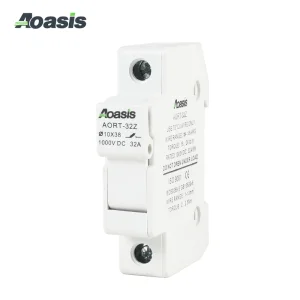
Explore our complete selection of DC disconnect switches, solar fuse holders, surge protection modules, and monitoring devices.
 SDEV Charger